> For the complete documentation index, see [llms.txt](https://docs.gaiodataos.com/llms.txt). Markdown versions of documentation pages are available by appending `.md` to page URLs; this page is available as [Markdown](https://docs.gaiodataos.com/tools/sources.md).
# Sources
The **Sources** panel in Gaio DataOS provides developers with a centralized view of all data sources available within a project. This includes internal buckets, shared data from other applications, and external databases configured by administrators. It is a critical area for building complete and connected data flows.
***
### 1. Default Project Bucket
Every application in Gaio automatically has **its own data bucket**, which appears in the *Sources* panel. This bucket contains **all tables created within the current project** and is the primary workspace for managing and transforming data locally.
***
### 2. Accessing Buckets from Other Projects
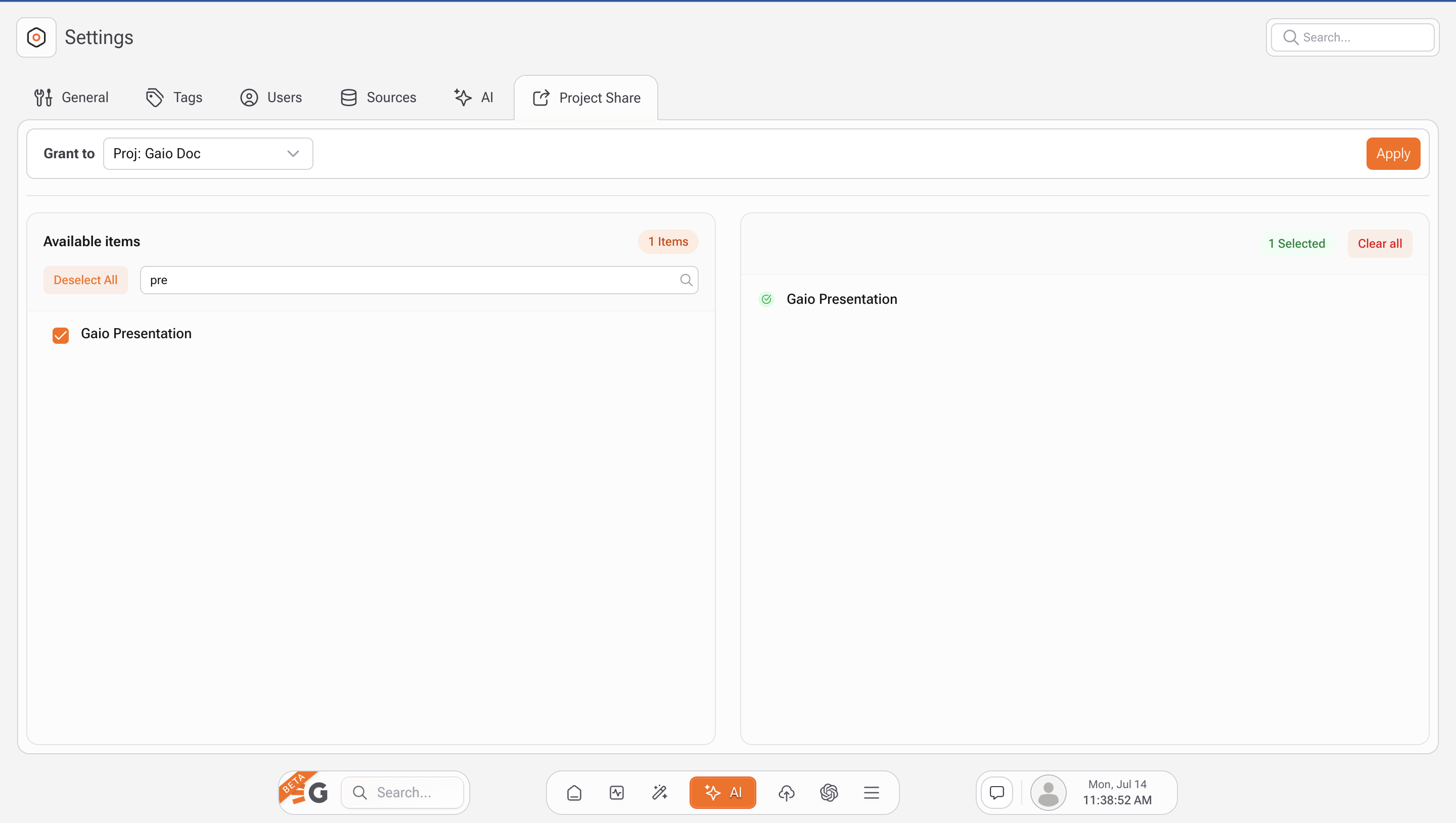
In addition to the default bucket, it is possible to **access buckets from other projects**—provided they are shared with the current project. This sharing is managed exclusively by administrators through:
* **Settings > Project Share**\
→ Admins can select the target project and grant access to specific buckets.
Once shared, these external buckets will appear under the *Sources* panel, grouped by the originating project name.
***
### 3. Registering and Authorizing External Databases
Gaio allows administrators to configure **connections to external databases**, such as:
* PostgreSQL
* MySQL
* SQL Server
* And more
This setup is done via:
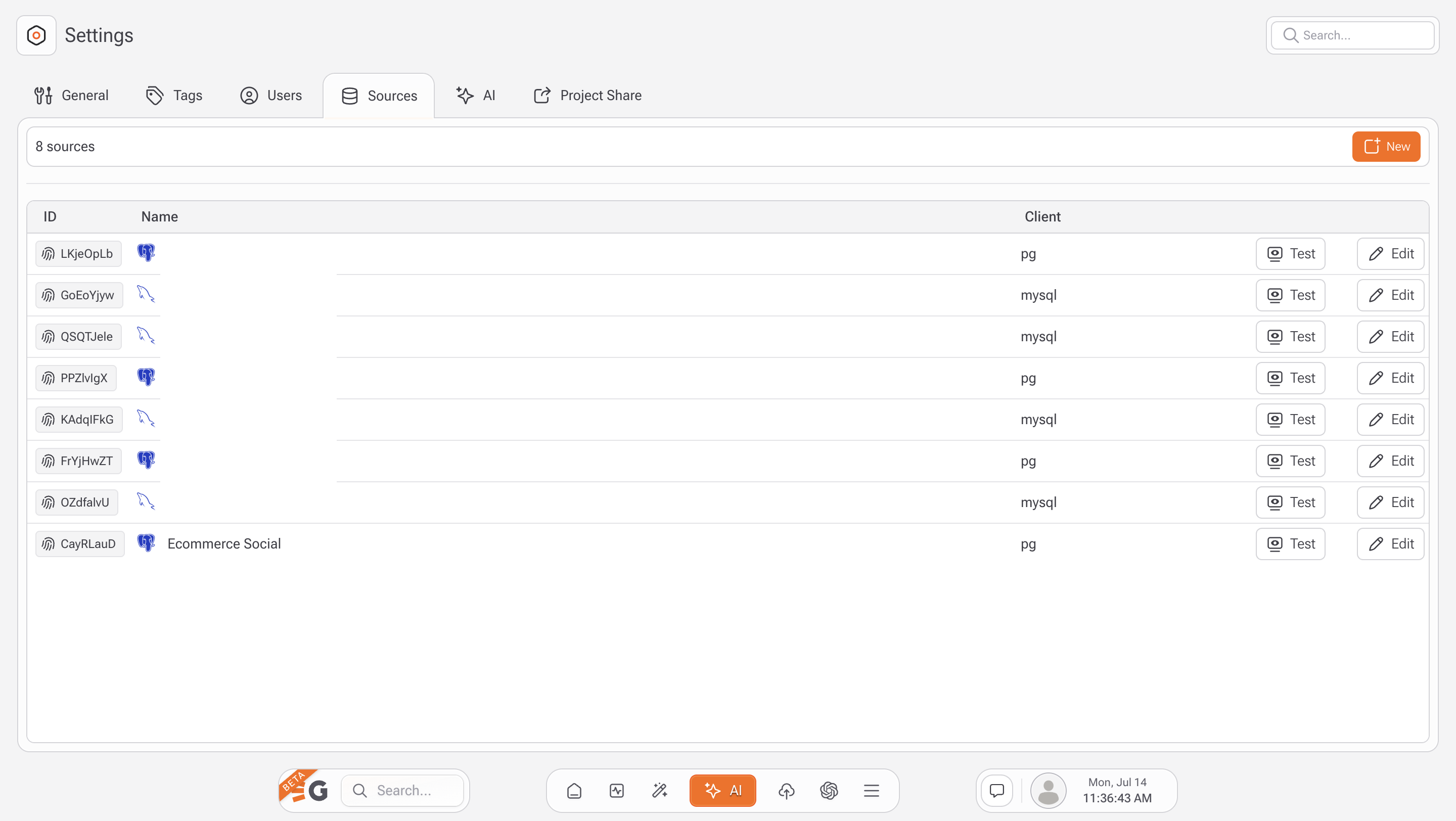
* **Settings > Sources (Admin only)**\
→ Each source can be tested and edited to ensure secure and functional access.
{% hint style="warning" %}
**Important**: After a database is registered, **access must be granted per user** through the **Tags** tab, where admins assign permissions to specific users for each data source.
{% endhint %}
***
### 4. Using Sources in Flows
Once permissions are set:
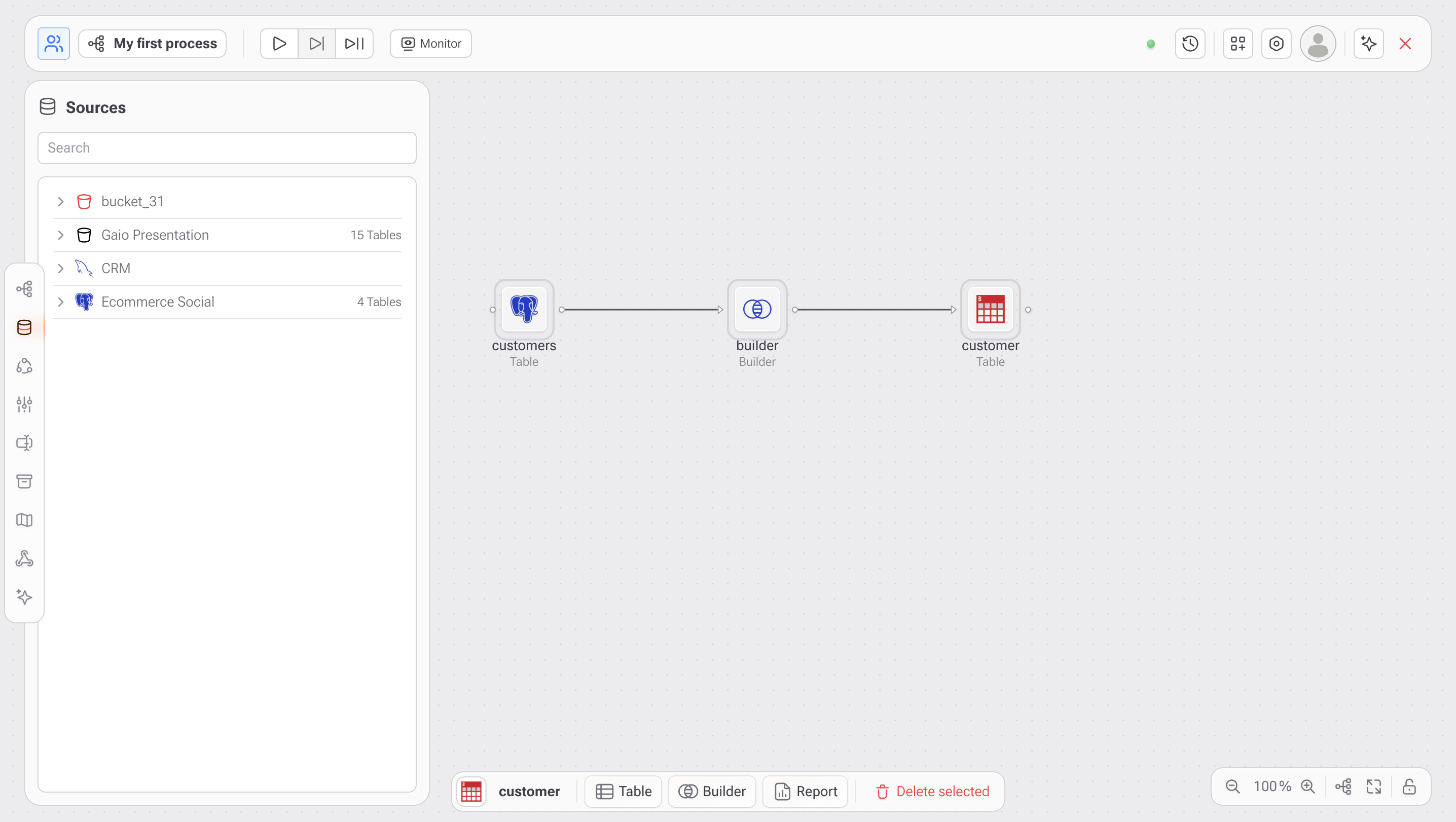
* All available sources will be visible in the *Sources* panel inside the studio.
* Users can **drag and drop tables** into the flow.
* These tables can then be connected to Builders, transformed, and stored in new tables within the project’s bucket.
***
#### Full Example
1. The project "Proj: Gaio Doc - Bucket 31" has its own bucket with tables like sales, `products`, and `customers`.
2. The admin shares the "Gaio Presentation" application’s bucket with "Proj: Gaio Doc - Bucket 31" via **Project Share**.
3. The admin registers a MySQL and PostgreSQL database in **Settings > Sources** and grants access to the user via **Tags**.
4. The developer working on "Proj: Gaio Doc - Bucket 31" now sees:
* Their default project bucket.
* The Gaio Presentation bucket with shared tables.
* The Ecommerce Social and CRM databases as an accessible source.
5. They drag `customers` into the flow, use a Builder block, and generate a new table `customer`.